IQM Books €42.2 Million in Orders as Quarterly Revenue Rises 51% in Q3 2026


Insider Brief
- IQM reported 51% revenue growth to €8.9 million and €42.2 million in new orders in the third quarter, led by a €33 million contract for its Halocene quantum computing platform.
- Outstanding customer orders reached €102.5 million, up 52% from the start of 2026, as IQM expanded sales into South America and added business in Japan.
- IQM maintained its full-year revenue forecast of €42 million to €47 million, while its quarterly net loss widened to €152.6 million, including a €127.1 million share-listing expense.
IQM Quantum Computers reported growing demand for its systems as it expanded into new markets and invested in technology designed to make quantum computing more reliable.
The company said in a statement on its Q3 2026 report that it booked €42.2 million in new orders in the third quarter, led by a major Finnish computing project, as revenue rose 51% from a year earlier.
“Q3 was a quarter of strong commercial momentum, with record new orders booked, our largest contract to date signed, and an expanded presence across four continents,” Dr. Jan Goetz, Co-Founder and Chief Executive Officer said in the statement. “This quarter, a leading AI factory committed to a multi-year path toward logical qubits on IQM hardware, not just buying today’s machine but investing in a roadmap they trust we will deliver. For years, the open question was whether quantum computers could work at all. Today, it is whether they can be built, delivered and operated at the pace the world needs them — and that is exactly what IQM was built for. With our first 150-qubit systems already at customer sites, we are focused on execution and building momentum toward our first error-correction demonstrators in 2027.”

Those new orders lifted the Finnish quantum computer maker’s backlog — which is the value of orders the company has secured but has yet to count as sales — to €102.5 million at Sept. 30, up 52% from the start of the year, the company said. Quarterly revenue reached €8.9 million, compared with €5.9 million a year earlier.
The largest new contract was a €33 million order for IQM’s Halocene platform from CSC’s LUMI AI Factory. The system is designed to support quantum error correction, a critical step toward computers that can perform longer, more reliable calculations.
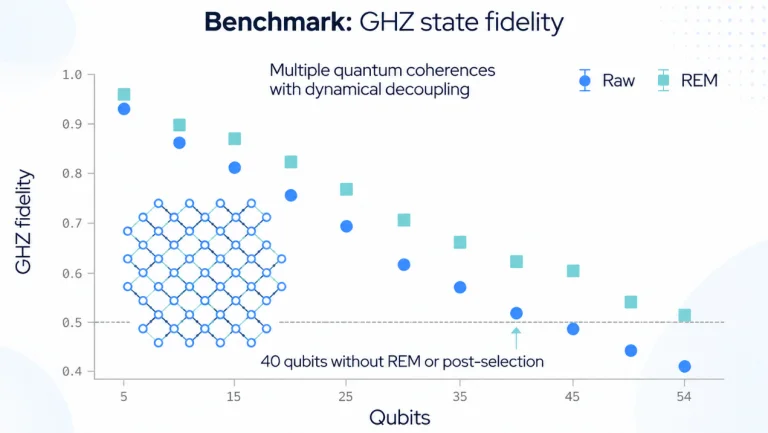
IQM said the project is on track to become Europe’s first superconducting quantum computer with logical qubits. These combine multiple physical quantum bits to detect and correct errors that otherwise disrupt calculations.
The company maintained its full-year targets for orders and revenue. Its quarterly net loss widened sharply, however, reflecting a €127.1 million share-listing expense and higher spending across research, administration and sales.
Orders Expand Across Markets
IQM’s third-quarter bookings brought order intake for the first nine months of 2026 to €52.9 million. The company reiterated its forecast for full-year orders of €65 million to €75 million.
The quarter also extended IQM’s customer base to a fourth continent through its first quantum computer sale in South America. The Eldorado Research Institute in Campinas, Brazil, ordered an IQM Spark system.
In Japan, TOYO Corp. ordered a second full-stack IQM quantum computer, also a Spark, for its research and development center in Tokyo. IQM said the sale supports Japan’s national goal of reaching 10 million quantum users by 2030.
The company also was selected for the first phase of the EuroHPC Joint Undertaking’s Quantum Grand Challenge, which seeks to integrate European quantum hardware into supercomputing centers.
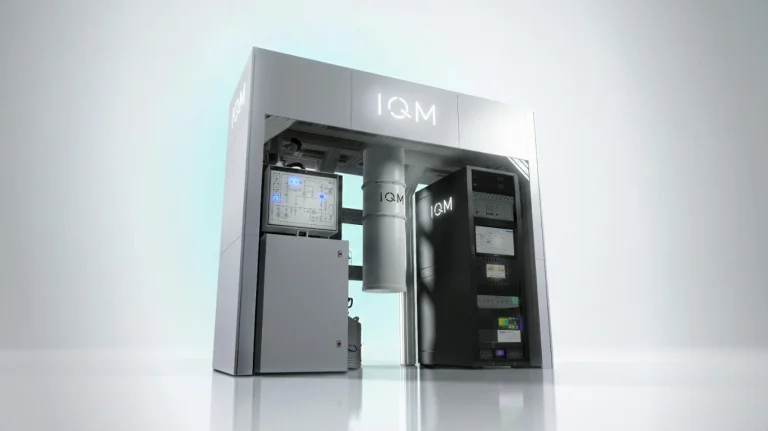
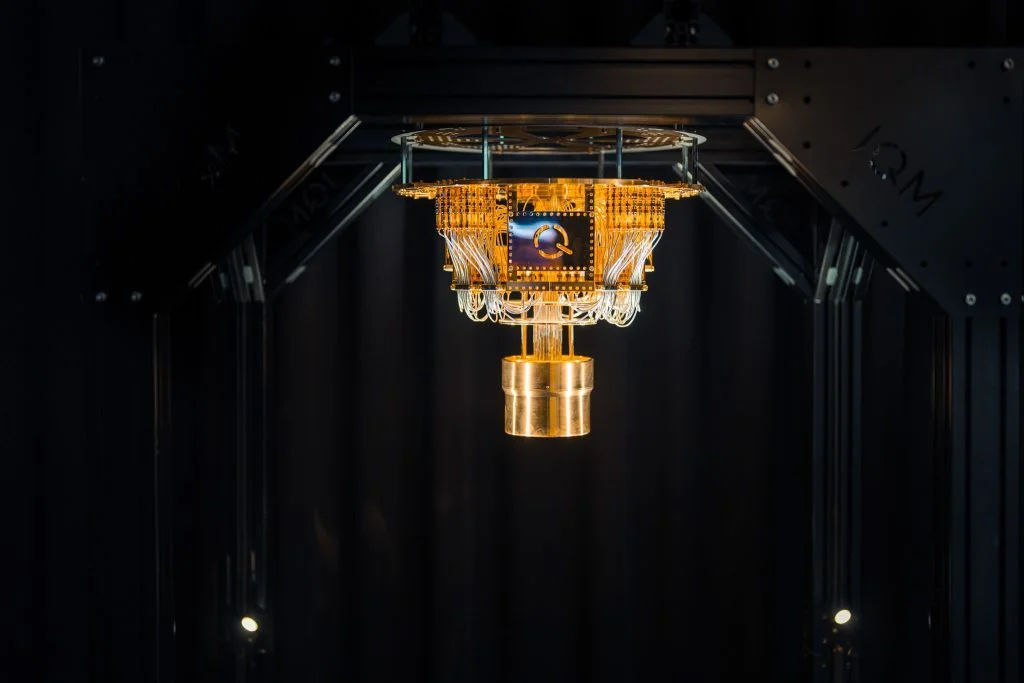
IQM said it has sold 31 quantum computers globally and delivered 17. Its systems use superconducting circuits, cooled to extremely low temperatures, to process quantum information.
Alongside hardware deliveries, IQM began integrating assets from Quantistry, adding an AI-powered platform for simulating chemistry and materials. The company said the software will allow chemists and engineers to run applications without relying solely on quantum specialists.
Revenue Grows as Spending Rises
Revenue for the first nine months rose 49% to €17.7 million from €11.9 million a year earlier, according to the unaudited quarterly report.
Chief Financial Officer Jan Kürschner said that revenue came entirely from commercial contracts, with no public funding or grants included in the figure. The company reported other operating income separately.
Third-quarter gross profit increased to €4.2 million from €2.3 million. Gross margin, the share of revenue remaining after the direct cost of sales, was 47%, compared with 46% in the second quarter.
The quarterly net loss widened to €152.6 million from €12.6 million a year earlier. In addition to the listing expense, research and development spending rose to €20.4 million from €13.7 million, while general and administrative expenses increased to €27 million from €2.7 million.
The operating loss reached €171.2 million, compared with €14.1 million a year earlier. For the first nine months, the net loss totaled €227.5 million.
IQM ended September with €260.4 million in cash and cash equivalents, down from €309.4 million following its July listing. The company attributed the decline to operating cash outflow, one-time listing costs and investment in chip fabrication and assembly capacity.
Delivery Timing Shapes Outlook
IQM maintained its full-year revenue forecast of €42 million to €47 million. With €17.7 million recorded through September, reaching that range would require approximately €24.3 million to €29.3 million in fourth-quarter revenue.
The company said the timing of customer acceptance can shift revenue between reporting periods.
For standardized systems, IQM records revenue when a customer accepts the computer, rather than when it ships or is installed. Acceptance can depend on site readiness, cooling and power infrastructure, and public-sector procurement approvals.
Larger, customized projects generate revenue over time as milestones are completed, the company said.
An acceptance delayed by several weeks across a quarter-end can therefore move reported revenue into the next period without changing the contract value, backlog or cash profile, according to IQM.
Founded in 2018 and headquartered in Espoo, Finland, IQM employs more than 450 people across Europe, Asia and North America. It makes its own processors and supplies complete quantum computing systems to businesses, research institutions and computing centers.

Keep track of everything going on in the Quantum Technology Market. In one place.
Topics

Matt Swayne
With a several-decades long background in journalism and communications, Matt Swayne has worked as a science communicator for an R1 university for more than 12 years, specializing in translating high tech and deep tech for the general audience. He has served as a writer, editor and analyst at The Quantum Insider since its inception. In addition to his service as a science communicator, Matt also develops courses to improve the media and communications skills of scientists and has taught courses.
[email protected]

Stay Ahead of Quantum
Get the latest research, company news, and market intelligence every week.
MENTIONED IN THE ARTICLE
IQM
IQM Finland builds scalable hardware for universal quantum computers, focusing on superconducting technology.
→

Instituto Eldorado
Instituto Eldorado is a Brazilian research and development institute with over 25 years of experience, headquartered in Campinas, Sao Paulo. It provides R&D and innovation services, laboratory testing, telecommunications product certification, education and training, and innovation consulting across sectors including information and communication technology, oil and gas, automotive, agribusiness, health, and energy. Its technical capabilities span intelligent software (AI, generative AI, cybersecurity, computer vision) and advanced hardware (medical devices, microelectronics, and packaging technologies). Eldorado is a member of EARTO, connecting Brazilian R&D to the European innovation ecosystem, and participates in international RISC-V initiatives for high-performance computing.
→

TOYO Corporation
TOYO Corporation is a Japanese measurement technology company that imports and distributes advanced electronic measurement instruments while developing its own high-value original products, guided by its philosophy of 'creating the future with measurement technology.' Its business spans decarbonization/energy, automotive and e-mobility, ICT and next-generation communications, EMC/large antennas, software development support, defense/marine, information security, life sciences, and quantum solutions. In the quantum field, TOYO partners with IQM to deliver superconducting quantum computers to Japan, providing on-premise full-stack quantum computers alongside a dedicated cloud platform for flexible access, and launched its quantum computer business in 2025. The company also offers calibration and testing services and holds ISO 9001, ISO/IEC 17025, ISO 14001, and ISO/IEC 27001 certifications.
→

EuroHPC Joint Undertaking
The European High-Perfomance Computing Joint Undertaking (EuroHPC JU) is pooling European resources and efforts to to develop a World Class exascale supercomputing Ecosystem in Europe.
→

Quantistry [Acquired by IQM]
Quantistry created a cloud-based simulation platform for material research and development, using quantum simulations, molecular dynamics and machine learning. IQM conducted a strategic asset acquisition comprising proprietary software and intellectual property of Quantistry in July 2026.
→